

As consumer preferences continue to shift toward personalized health and experiences, sustainability, and global flavor exploration, food and beverage manufacturers must evaluate how to meet the increasing demand for ingredients & products that provide benefits beyond general nutrition. Similar to previous years with our 2024 Beverage Ingredient Trends and 2025 Food & Beverage Trends articles, the experts at AIFI offer insight on trending ingredient patterns and predictions for 2026 with a data-driven deep dive into key ingredients that will shape 2026 food & beverage product development. 2026 food and beverage trends identified by AIFI include long-standing trends seeing innovation and new emerging trends across the entire food and beverage landscape. Many of these trends fall into multiple separate but connected categories.
1. Functional Proteins & Fiber
Why are protein & fiber trending?
Protein and fiber fortification are a dominant ingredient trend across the food and beverage landscape. These products pack additional protein and dietary fiber into beverages, snacks, gluten-free products, and meal replacements as consumers prioritize health, metabolic support, satiety, and personalized nutrition.
Diverse Protein Options
- Beyond whey and soy, food & beverage brands are seeking new sources of protein in response to their customers who desire alternative proteins. There has been an increased consumer interest in plant protein, animal protein, and hybrid protein products, which are products with both plant and animal protein ingredients.
Pulse proteins (chickpea, mung bean, fava)
- Gaining traction for their balanced amino acid profiles, allergen-friendly positioning, neutral flavor improvements, and compatibility with clean-label formulations. Pulse proteins are increasingly used in snacks, bars, baked goods, pasta, and beverage applications to incorporate protein and fiber.
Precision fermented proteins
- By fermenting beta-lactoglobulin proteins, companies have begun offering dairy-identical functionality (foaming, emulsification, melt) without animal agriculture. Precision-fermented whey and casein proteins are enabling hybrid and plant-forward products with improved texture, solubility, and sensory performance.
Functional Health Benefits
- Protein and fiber assist in muscle maintenance while also offering metabolic health support. These benefits are critical for consumers who are currently using GLP-1 medication and/or those who participate in other weight management programs.
Protein Market Growth
- North America had the highest market share of 41% in the 2025 global protein ingredient market.
2. Personalized Nutrition for Targeted Health Benefits
Why are personalized nutrition products trending?
 Consumers have had a growing interest in the relationship between the food they consume and their health. What started as a focus on digestive health in the gut grew to include the link between digestive and cognitive health in the early 2020s.
In 2025, with the rapid rise in GLP-1 medication use, consumer interest in mental, digestive, and preventative health increased even further, introducing even more consumers to products that support specific personal health benefits. In 2026 we expect to see this trend grow even further to include targeted benefits beyond the gut and brain, including products with a personalized focus on energy, immunity, and preventive health through diet.
Gut Health
Gut health primarily focuses on 3 main areas: probiotics, prebiotics, and fiber.
Probiotics
Probiotics are live cultures that are often found in fermented foods.
Fermented Dairy – kefir, yogurt,
Fermented Vegetables – sauerkraut, pickles, kimchi
Fermented Soy – miso, tempeh
Other Probiotics – fermented sauces, sourdough bread, kombucha
Prebiotics & Fiber
Prebiotics are digestion-resistant carbohydrates that provide fuel for the probiotics to thrive. These ingredients are primarily specialized fibers that aid in boosting gut flora.
Inulin (chicory root fiber) – prebiotic, supports microbiome health and satiety, also acts as a texture modifier in low sugar beverages
Acacia Gum – soluble fiber with stabilizing and emulsifying properties
Whole Grain Oats – rich in beta glucan prebiotic fiber
Brain Health
Brain Health focuses on cognitive function, memory, mood, and mental health regulation fueled by adaptogens, amino acids, healthy fats, vitamins, & minerals
Adaptogens – natural ingredients that help the body manage fatigue, stress, and anxiety by promoting balanced caloric intake and expenditure (homeostasis)
Branch Chain Amino Acids (BCAA) – amino acids that promote protein synthesis
Medium Chain Triglycerides (MCT) – healthy fats that provide fast-absorbing energy on a cellular level
Immunity & Preventative Health
Primarily focus on providing long-term immune system function and protecting overall health by reducing inflammation and supporting the body’s natural defense barriers.
Antioxidants – compounds that inhibit oxidation to protect cells from damage caused by free radicals.
Vitamin C & E – essential nutrients that support various cellular functions of the immune system.
Turmeric – turmeric contains curcumin, a potent bioactive compound known for its ability to reduce inflammation at the molecular level.
Ginger – provides both digestive support and immune-boosting properties.
Personalized Health Market Growth
The global personalized nutrition market is forecasted for substantial growth, showing a potential revenue increase from around $15.97BN (2025) to $48BN (2030) according to Grand View Research.
2026 Gut Health Trend Predictions
Products developed for specific targeted results. Fortified bars, prebiotic & probiotic sodas that combine fibers and live cultures to support holistic gut health.
3. Plant-Based Ingredients
In our 2025 Trend Predictions article, we highlighted microalgae, kelp, spirulina, seaweed, and water lentils as trending plant-based ingredients. All signs point to this momentum carrying over into 2026. However, the plant-based market is set to enter a new phase in 2026, moving beyond its initial position in the market as meat and dairy alternatives. Expect to see the integration of functional plant ingredients across mainstream applications, including snacks, beverages, bakery, dairy, and RTE meals.
Notable Plant-Based Ingredients
- Pulse Proteins (Pea, Lentil, Chickpea, Fava Bean) – high in protein & fiber, neutral flavors, strong emulsification properties, and favorable sustainability metrics. Nitrogen-fixing pulses also support regenerative agriculture initiatives, making them attractive from both formulation and ESG standpoints.
- Biomass & Precision Fermented Proteins – precision fermented from fungi and mycoproteins are gaining traction as texture modifiers in plant-based and hybrid applications.
- Protein Systems – Plant-based protein systems or engineered systems using two or more source materials will see growth as well for specific formulation applications. We have seen the widespread use of soy protein and wheat gluten to create fibrous texture in meat analogues similar to muscle fiber. We expect this trend to extend to systems formulated to assist in emulsification, gelling, and thickening properties.
- Texture & Structural Innovation – One of the biggest barriers to repeat purchase in plant-based categories remains taste & texture. Emerging technologies such as shear cell processing, advanced extrusion, and 3D structuring are improving texture in meat analogues.
In dairy alternatives, fat structuring using plant-derived lipids and emulsified systems is closing the gap on the creaminess, mouthfeel, and melt of traditional dairy components.
2026 Plant-Based Ingredient Trend Predictions
- Hybrid plant/dairy and plant/meat systems designed for improved cost and sensory performance
- Increased investment in fermentation infrastructure to enhance functionality
Consumers will favor products and manufacturers that treat plant-based ingredients as functional ingredient systems rather than marketing claims. Companies that optimize for taste, texture, and nutrition will be best positioned for long-term success.
AIFI Dairy & Dairy Alternative Ingredients
4. Global & Bold Flavor Ingredients
In 2025, bold, culture-driven flavors saw use across food & beverage products. As we enter 2026, flavor innovation continues to show a trajectory toward cultural diversity and fusion profiles. Blending traditional ingredients with modern applications will push product innovation forward, leading to new & exciting flavor profiles and finished goods.
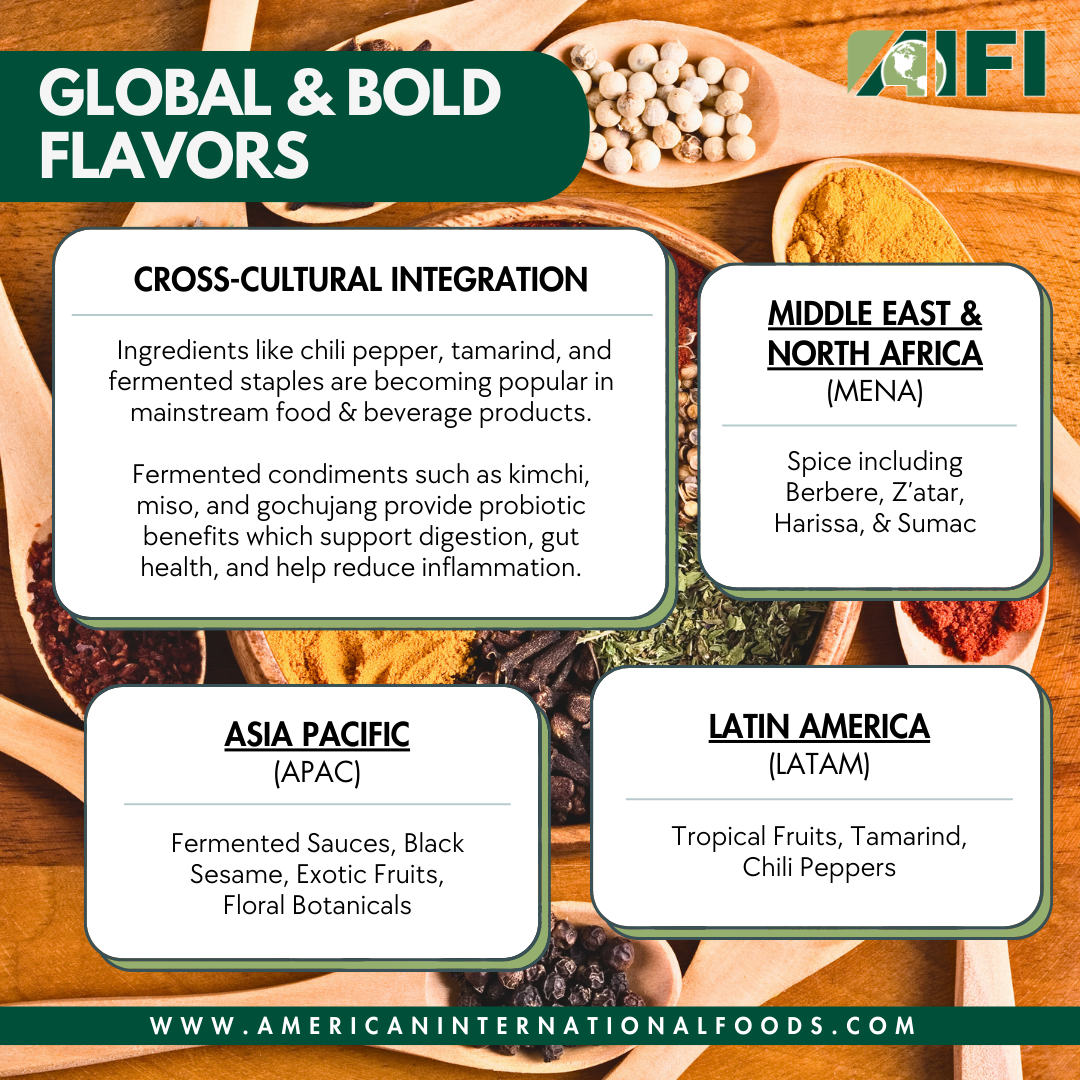
Regional Global Flavors
Asia Pacific (APAC) – Fermented Sauces, Black Sesame, Exotic Fruits, Floral Botanicals
Middle East & North Africa (MENA) – spices including berbere, za’atar, harissa, & sumac
Latin America (LATAM) – Tropical Fruits, Tamarind, Chili Peppers
Cross-Cultural Integration
Ingredients like chili pepper, tamarind, and fermented staples are evolving beyond ethnic niches into mainstream food & beverage products. Fermented condiments such as kimchi, miso, and gochujang also provide probiotic benefits that support digestion and gut health and help to reduce inflammation.
Bold Pairings & Fusion Profiles
Fusion flavor development, which is twisting traditional cuisines by marrying their flavor profiles, remains a key driver of curiosity and culinary excitement. Exotic fruits and botanicals will be a key component of new flavor ideation, while familiar sweet flavors paired with smoky, spicy, sour, and savory will be the most prevalent. Manufacturers have an opportunity to cater to consumer demand for new bold flavors through seasonal or limited-time offerings.
2026 Global Flavor Trend Predictions
Flavor fusion, especially sweet-spicy (“swicy”) and evolving hybrids like sweet-spicy-tangy (“swangy”). Global spice blends, fermented sauces, botanical beverages, and cross-category flavor mashups in snacks and RTDs.
2026 Ingredient to Watch
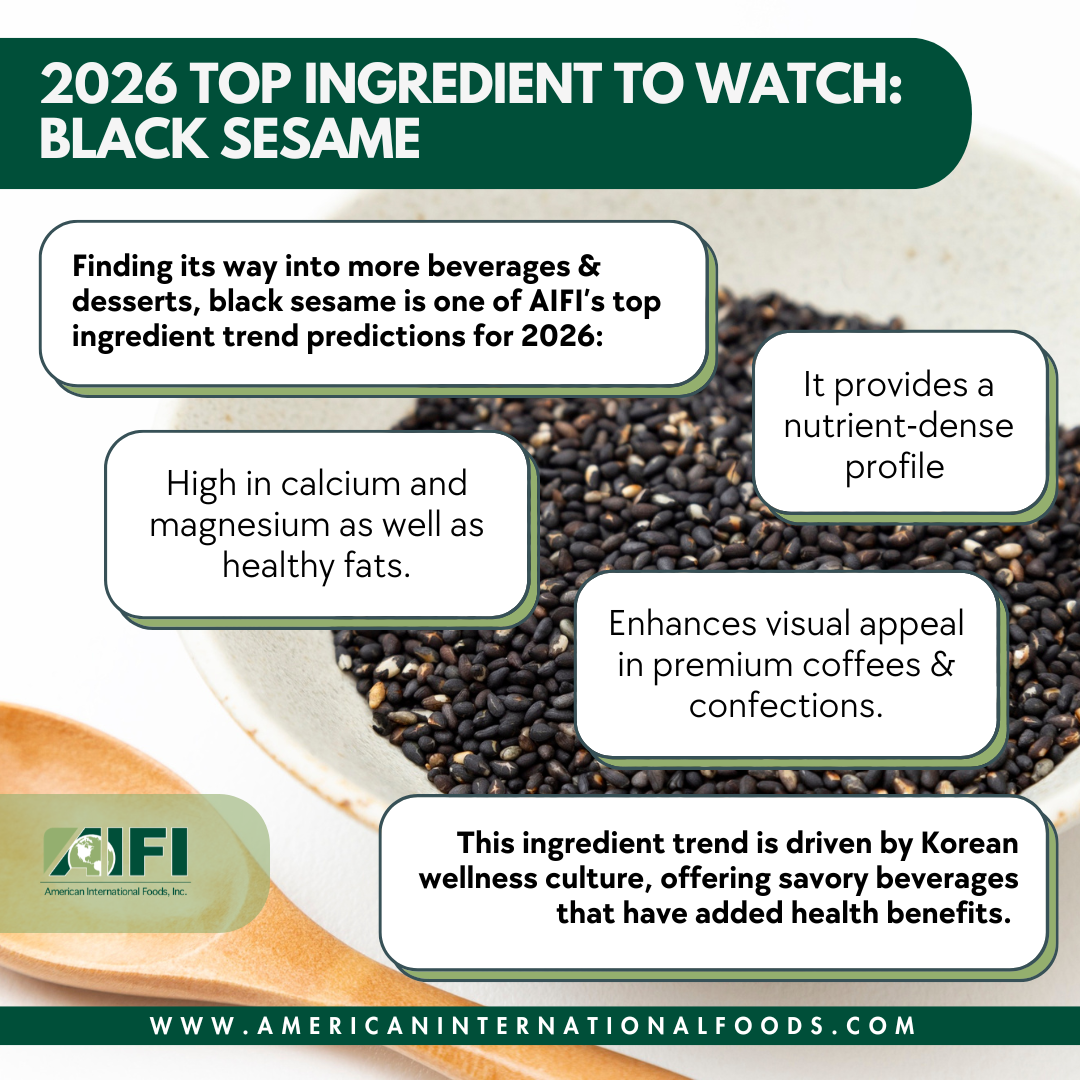
Black Sesame
Finding its way into more beverages and desserts, black sesame is one of AIFI’s top ingredient trend predictions for 2026.
High in calcium and magnesium as well as healthy fats
Provides a nutrient-dense profile
Enhanced visual appeal in premium coffees & confections
This trend is driven by Korean wellness culture, offering savory beverages that have added health benefits.
Click here to read more about AIFI’s inventory of Spice & Seasoning Ingredients
5. Multi-Sensory Experiences
Grounded in research from consumer behavior and sensory science, these experiences recognize that taste alone no longer differentiates a brand. Sight, sound, smell, texture, and even atmosphere influence how food is perceived and remembered. According to industry insights, 63% of consumers crave multisensory brand engagements, and 72% seek experiences that stimulate multiple senses, driving meaningful emotional connections and purchase decisions. https://tenaciousplate.thefoodgroup.com/sensory-trends-in-marketing.
Examples of multisensory engagement have existed for years. Molson Coors’ thermochromic cans shift color when the product reaches optimal temperature. Babybel cheese delivers a tactile, interactive unwrapping experience that enhances anticipation and playfulness. These products demonstrate how visual and tactile elements can elevate everyday consumption moments.
In 2026, the opportunity expands beyond isolated sensory cues. We anticipate growth in fully immersive product experiences that engage multiple senses simultaneously, combining visual appeal, engineered sound cues (the snap, crack, or pop of opening the packaging), aroma release, and, most critically, texture innovation. As consumers seek novelty and emotional resonance, texture is emerging as a powerful differentiator.
Texture Innovation
- Crispy & Crunchy – layered crunch, textured inclusions, and snap and fracture acoustics that amplify freshness perception
- Chewy & Creamy – soft centers with firm shells, aerated creams, and slow melt formats that extend flavor delivery
- Hybrid textures – crunchy coatings over creamy cores or chewy inclusions in crisp snacks create dynamic sensory contrast, increasing engagement throughout the eating occasion
Manufacturers and product developers that intentionally provide experiences across all five senses will be best positioned to command attention, justify premium pricing, and build lasting consumer loyalty.
6. Sustainable & Clean Label Ingredients
Sustainability is not only about product packaging; it also includes ingredient sourcing. ESG standards have provided producers with a standardized format for reporting environmental sustainability. As consumers demand cleaner labels along with increased environmental responsibility, the source of food & beverage ingredients can be just as important as taste.
Eliminating Food Waste
- Upcycled byproducts – Fruit peels and vegetable pulp repurposed for fiber and antioxidants.
- Extended Shelf Life Products – Technological processes such as high-pressure processing (HPP), pulsed electric fields (PEF), and modified atmosphere packaging (MAP) have allowed for the production of cleaner, longer-lasting foods without the use of artificial preservatives.
- Clean label components – With increased regulations removing synthetic dyes and additives from consumer goods, food & beverage manufacturers are exploring healthier ingredient options that won’t significantly impact their recipes with regards to taste and visual appeal.
- Clean label growth – Market projections estimate the clean label ingredient market will surge toward $212.4B by 2030, driven by a demand for natural and organic products.
2026 Sustainability & Clean Label Trend Predictions
Greater scrutiny and substantiation of sustainability claims verified by ESG reports or other certification. Upcycled ingredient & plant protein snacks, domestic supply chains that provide ingredient sourcing with a lower environmental impact.
7. Convenience Meets Premium Nutrition
In 2025, consumers showed they won’t sacrifice health for convenience as RTE (ready-to-eat) and RTD options experienced increasing demand, growing at a CAGR of 5.68%. This year we will see a continuation of premium RTE and heat-and-eat products.
Ready-to-Eat & RTD Innovation
- RTD beverages – Functional beverages specifically formulated for hydration, energy, cognitive performance, or gut health will lead the RTD market. Additionally, low-sugar and naturally sweetened beverages will cater to a portion of the market. and flavor-forward RTDs are key trends to watch.
- Hybrid meals – “Premium nutrition + grab-and-go ease” products, which include nutrient-rich meals and fortified snacks, are expected to see growth. Single-serving-size snacks and meals with protein claims are expected to lead this growing segment.
2026 Premium Nutrition Trend Predictions
Functional frozen meals, RTE meals with nostalgic and global flavors (e.g., Korean BBQ bowls with gochujang, coconut curry noodles with lime), and drinks that offer balanced nutrients for targeted results (essential vitamins & minerals, proteins, prebiotics, etc.).
Top 25 Food & Beverage Trends 2026

2026 Trend Relationship Map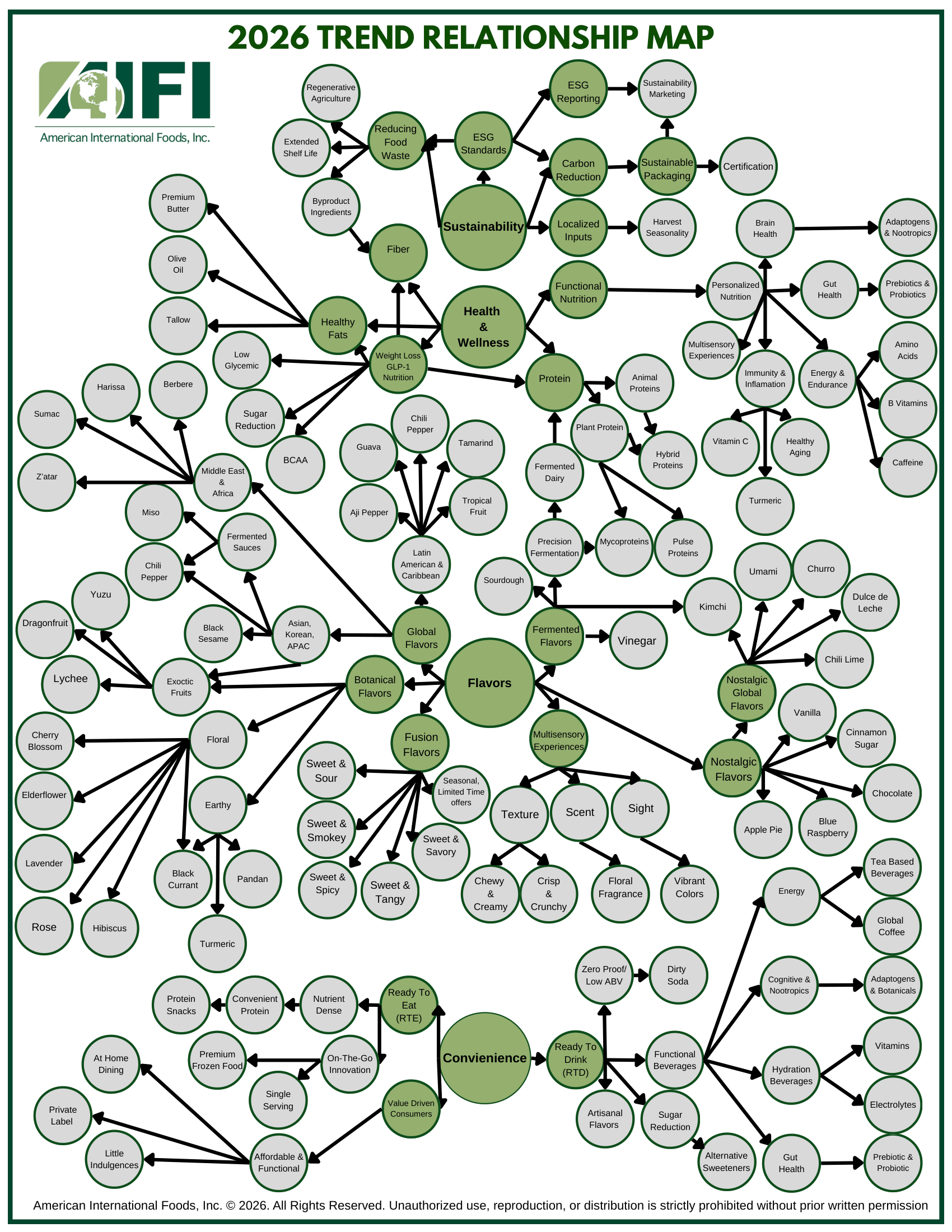
About AIFI – A Leading Food & Beverage Ingredient Supplier & Distributor

We recognize the importance of staying ahead of consumer trends. American International Foods, Inc. has over 20 years of experience in helping its clients effectively predict and respond to top ingredient trends in the food manufacturing sector. We strive to offer our clients several ingredient options, including non-GMO, gluten-free, organic, and fair trade.
We maintain complete documentation for each ingredient we offer, allowing our customers transparency and peace of mind. AIFI provides its customers with unparalleled industry knowledge, personalized supply chain solutions, and a complete product line comprised of more than 2500 food and beverage ingredients.
For further information about ingredient sourcing, pricing, general inquiries, or additional information regarding 2026 food & beverage trends, please contact AIFI using the link below.