

Originally developed for diabetes and weight management, GLP-1 medications are now driving noticeable shifts in consumer behavior, product innovation, and food & beverage ingredient demand. As more consumers adjust their eating habits due to the appetite-suppressing effects of GLP-1 medications, food manufacturers are rethinking portion sizes, nutritional profiles, and product formulation strategies. This shifting landscape presents both challenges and opportunities for food manufacturers and suppliers as they adapt to changing consumer interests and emerging functional health priorities.
The experts at American International Foods, Inc. (AIFI) will dive deeper into the latest GLP-1 medication trends and their effects on the food & beverage industry leading into 2026 and beyond:
- Current GLP-1 Market Projections
- GLP-1 Medication Impact on Food Manufacturers
- Beneficial GLP-1 Ingredients
- Food & Beverage Companies Developing GLP-1 Friendly Products
- List of GLP-1 Friendly Foods & Ingredients
Current Market Projections & The Future of GLP-1 Medication
According to the Washington Post, U.S. spending surged to approximately $71.7 billion in 2023, up from $13.7 billion in 2018 for a nearly 500% increase. Semaglutide-based products (e.g., Ozempic, Wegovy) and tirzepatide (Mounjaro) made up 70% of this spending.
As of 2024, over 2% of Americans use GLP-1s for overweight/obesity, and around 4% use them overall (for any indication), with nearly half of users using them for weight loss.
Market Size & Growth Forecasts
The global GLP-1 analogues market is estimated at $66.48 billion in 2025, projected to skyrocket to $879.9 billion by 2034, representing an impressive CAGR of ~33.2%
Another source estimates the broader GLP-1 market at $47.74 billion in 2024, with a more conservative CAGR of 10.9% from 2025–2034.
According to Grand View Research, specifically for GLP-1 weight-loss, the market size in 2025 is about $20.86 billion, expected to grow to $48.84 billion by 2030, with a CAGR of ~18.5%.
Trends & Treatment Insights for 2025
Real-world data show rapid adoption in type 2 diabetes care: between early 2022 and mid-2024, roughly 1 in 5 type 2 diabetes patients were on GLP-1 therapy. Among GLP-1 users, about 25% lacked a diabetes diagnosis, signaling a strong weight-loss use trend.
Treatment adherence is improving: persistence improved from ~40% for those starting treatment in 2023 to 63% for those beginning in early 2024 (one-year continuation).
Efficacy differences: In the SURMOUNT-5 trial, tirzepatide achieved ~20% weight loss vs. ~14% with semaglutide, prompting shifting clinical preferences.
Expanding applications: GLP-1s are now being explored beyond metabolic diseases, including liver disease (e.g., MASH/NAFLD), cardiovascular health, sleep apnea, alcohol use disorder, and potentially reducing obesity-related cancer risk.
Analysts now predict that the GLP-1 market could reach $71 billion by 2032, driven by increasing demand for these medications in the treatment of obesity, type 2 diabetes, and cardiovascular conditions. Novo Nordisk and Eli Lilly currently dominate this market and are expected to maintain a combined share of about 90% due to strong product offerings and continuous innovation in clinical trials. Novo’s Ozempic and Wegovy alone generated $4.3 billion in the second quarter of 2023, reflecting the surging demand.
Food Manufacturing Impacts of GLP-1 Use
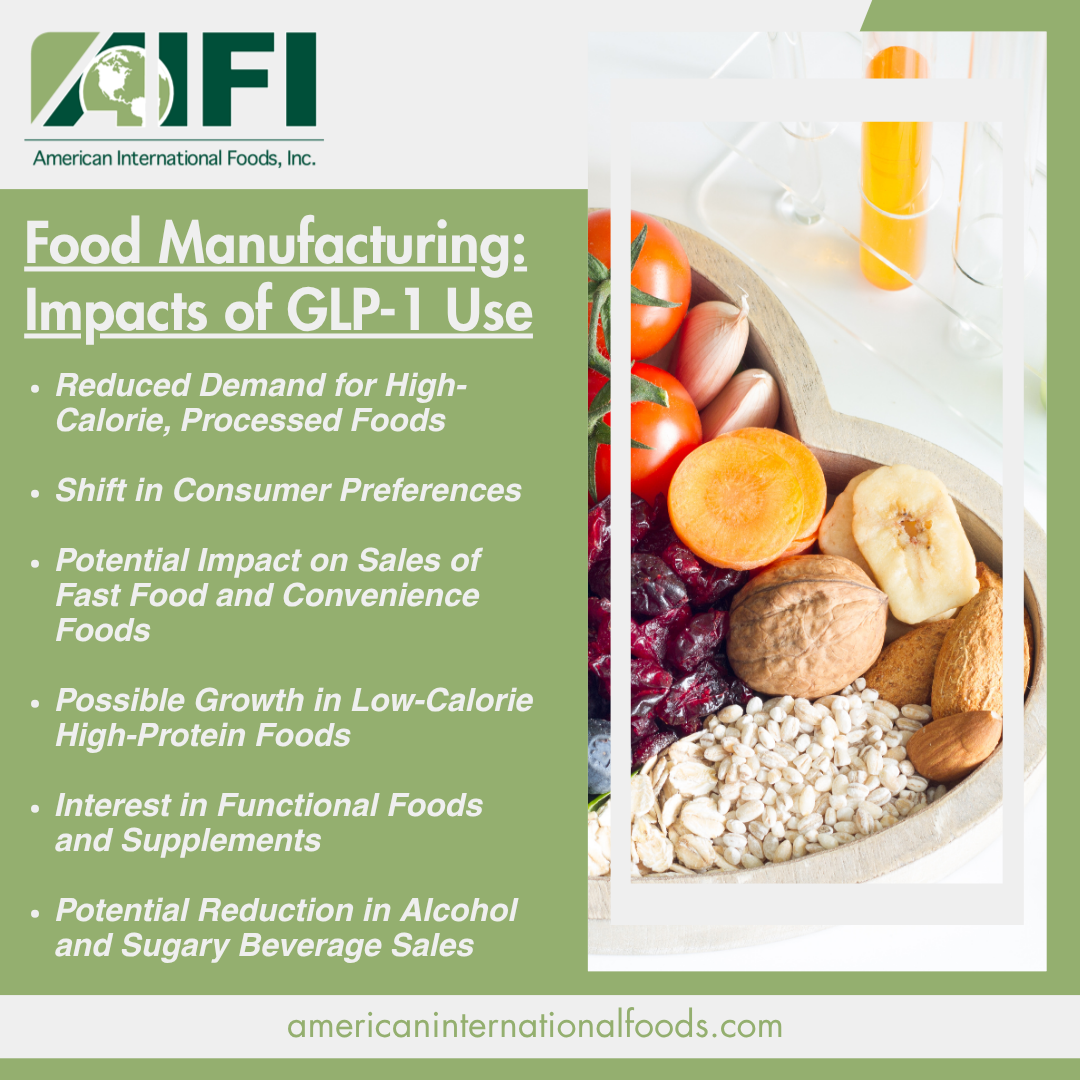
Reduced Demand for High-Calorie, Processed Foods
GLP-1 drugs curb appetite and often reduce cravings for calorie-dense, highly processed foods. This could lead to reduced demand for snacks, sweets, sugary beverages, and other foods commonly associated with indulgence and “comfort eating.”
Shift in Consumer Preferences
As users of GLP-1 medications experience less hunger and eat smaller portions, they may shift towards more nutrient-dense foods that offer better satiety per calorie, like protein-rich foods, fruits, and vegetables. This shift could benefit manufacturers focused on healthier, whole-food options.
Potential Impact on Sales of Fast Food and Convenience Foods
Many fast-food chains and convenience food producers may see decreased sales if a significant portion of consumers on GLP-1 drugs reduce their frequency of fast-food meals. This change could force the food and beverage industry to adapt by offering smaller portion sizes or more health-focused options.
Possible Growth in Low-Calorie, High-Protein Foods
The demand for high-protein, low-calorie foods could continue to rise as GLP-1 users seek food & beverage products that maximize satiety. Manufacturers that focus on these products, such as protein bars, shakes, and low-calorie snacks, may find new opportunities for growth.
Interest in Functional Foods and Supplements
GLP-1 drugs may increase consumer interest in functional foods that complement weight management and support overall health. This could lead to growth in the functional foods sector, including products that enhance gut health or provide balanced nutrition in smaller portions.
Potential Reduction in Alcohol and Sugary Beverage Sales
GLP-1 medications are known to reduce cravings for sweets and alcohol for some users, potentially reducing demand in those categories. Soft drink manufacturers and breweries may experience an impact if this trend continues.
Beneficial Ingredients for GLP-1 Users
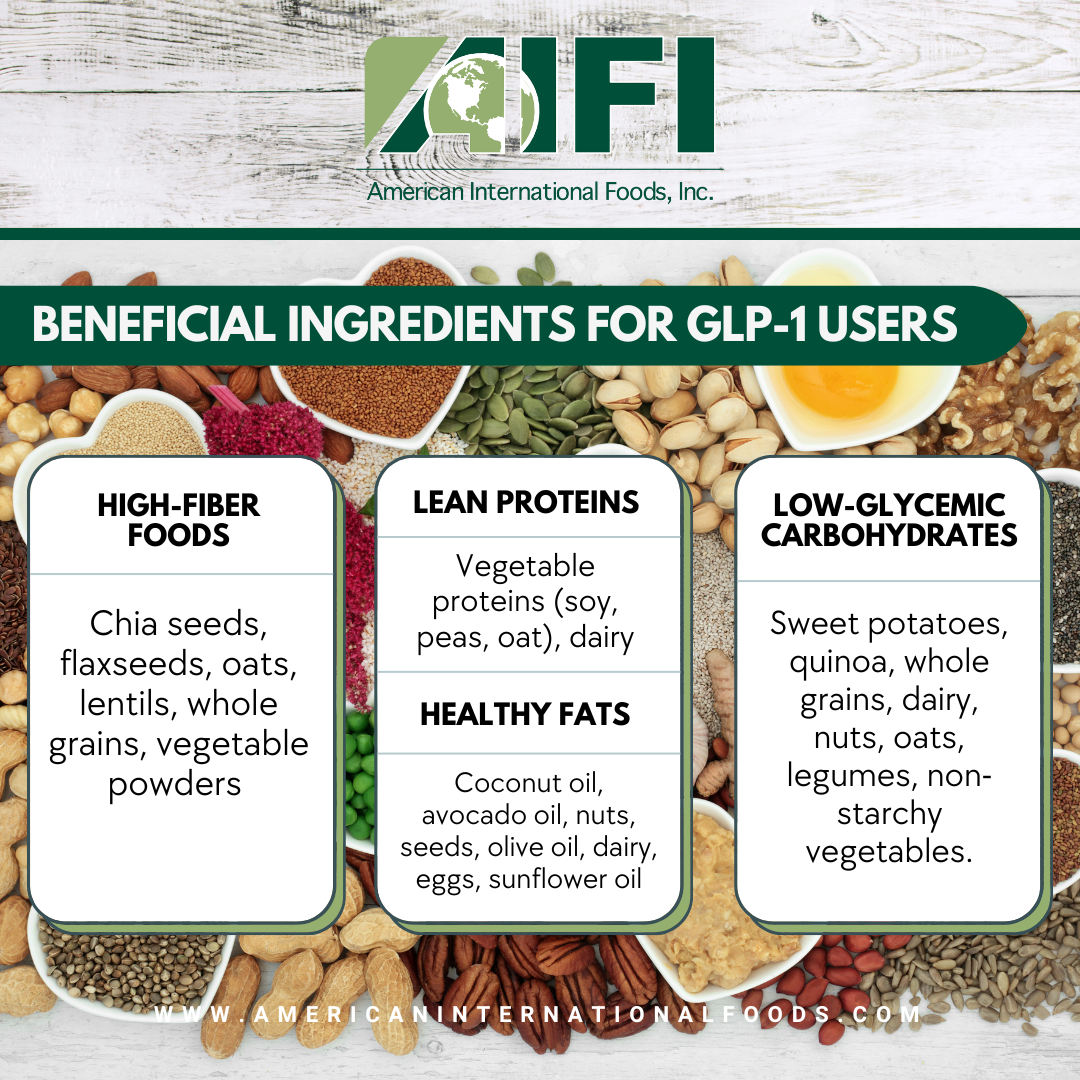
High-Fiber Foods
Examples: Chia seeds, flaxseeds, oats, lentils, whole grains, vegetable powders
Benefits: Fiber slows digestion, which can help prevent blood sugar spikes and promote satiety. High-fiber foods can reduce nausea, a common side effect, by promoting a more stable digestive rhythm.
Lean Proteins
Examples: Vegetable proteins (soy, peas, oats), dairy
Benefits: Protein is essential for maintaining muscle mass and keeping you feeling full for longer. Combining GLP-1 medication with protein-rich foods can support sustained energy levels and contribute to a reduction in overeating.
Healthy Fats
Examples: Coconut oil, avocado oil, nuts, seeds, olive oil, dairy, eggs, sunflower oil
Benefits: Healthy fats are crucial for maintaining fullness and supporting heart health. They can help stabilize blood sugar levels and reduce cravings, which work in tandem with the appetite-regulating effects of GLP-1 medication.
Low-Glycemic Carbohydrates
Examples: Sweet potatoes, quinoa, whole grains, dairy, nuts, oats, legumes, non-starchy vegetables.
Benefits: These carbohydrate types are digested more slowly and lead to fewer blood sugar spikes. Since GLP-1 medications help with blood sugar management, consuming low-glycemic carbs can work well with GLP-1 medication, providing stable energy levels.
Complex Carbohydrates
Examples: Whole grains, brown rice, quinoa, oats, ancient grains, farro.
Benefits: These carbs, when paired with fiber and protein, offer energy without causing large spikes in blood sugar. They also help with satiety, which aligns well with the appetite-suppressing effects of GLP-1 medications.
Probiotic-Rich Foods
Examples: Fortified foods (kefir, kimchi, kombucha), dairy, pickled products
Benefits: GLP-1 medications can impact gut motility, sometimes leading to nausea or constipation. Probiotics support digestive health by balancing gut bacteria, which may help reduce GI symptoms.
Ginger & Peppermint
Benefits: Ginger can help with nausea, while peppermint may reduce bloating and discomfort. These can be especially helpful in tea form, as both ingredients help ease digestion and support comfort when taking GLP-1 medications.
Hydrating Foods & Beverages
Examples: Cucumber, watermelon, broth, herbal teas.
Benefits: GLP-1 medications can increase the risk of dehydration, especially if they cause digestive side effects. Staying hydrated is essential for digestion and overall health.
Food and Beverage Companies Beginning to Target GLP-1 Users
Healthy Snacks & Small Meals
- Nestlé and Kellogg’s have reportedly started looking into snack products with lower calorie counts and high nutritional density. For GLP-1 users who tend to eat smaller portions, these brands are developing nutrient-packed, smaller-portion foods that help users get the most from every bite. Nestlé introduced a product line called Vital Pursuit, which offers high-protein, high-fiber frozen meals. These are portion-sized to suit reduced appetites and include nutrient-enriched options to compensate for lower overall food intake.
- WeightWatchers has partnered with telehealth companies that prescribe GLP-1 medications and is adjusting its meal plans and snack offerings to align with the reduced caloric intake needs of users on these medications.
Protein Supplements & Meal Replacements
- Huel and Soylent are two companies known for meal replacement products, and they’re reportedly looking into formulations that appeal to those on GLP-1 medications. These products are designed to offer balanced nutrition in small, easily digestible portions.
- Premier Protein and Orgain have also been focusing on high-protein, low-calorie drinks, appealing to consumers who need small but high-quality sources of protein, which can be more challenging for GLP-1 users with reduced appetite.
Hydration & Functional Beverages
- Gatorade and Liquid I.V. are expanding their range of electrolyte and nutrient-enriched hydration drinks, recognizing that many GLP-1 users need to prioritize hydration. These beverages provide a way for users to get essential nutrients in liquid form.
- Smaller brands, like Hydrant, are promoting products that support hydration and electrolytes, which can be beneficial for individuals experiencing nausea or dehydration from GLP-1 medications.
Gut-Friendly Products
- Activia by Danone and Kombucha brands (e.g., Health-Ade and GT’s Kombucha) are marketing products that support digestive health, a concern for some GLP-1 users due to side effects like nausea and constipation. These products focus on probiotics and prebiotics, aiming to ease digestive discomfort.
Low-Glycemic & Sugar-Free Options
- Halo Top and Enlightened (low-calorie, low-sugar ice cream brands) have increased their marketing efforts toward consumers mindful of sugar intake, as some GLP-1 medications affect blood sugar sensitivity.
- SmartSweets is another example, offering candy alternatives with reduced sugar, designed to satisfy cravings without causing a spike in blood sugar.
Food and Beverage Ingredients – GLP-1 Friendly
- Whey protein: Milk, yogurt, cottage cheese
- Soy protein: Tofu, edamame, soy nuts
- Lean protein: Chicken, eggs, beans
- Whole grains: Oats, sorghum biscuits, quinoa
- Low-glycemic-index beverages: Water, coffee without sweeteners, green tea
- Oils: Extra virgin olive oil, avocado oil, vinegar
- Insoluble fiber: Nuts, peas, cauliflower
- Leafy vegetables: Kale, spinach, collard greens
- Low-sugar fruits: Berries, apples, oranges
- Probiotics: Kefir, kimchi, and Greek yogurt
About AIFI – A Leading Ingredient Supplier & Distributor
We recognize the importance of staying ahead of consumer trends, including the impact of GLP-1 medications on food & beverage manufacturers. American International Foods, Inc. has over 20 years of experience in helping its clients effectively predict and respond to top ingredient trends in the food manufacturing sector. We strive to offer our clients several ingredient options, including non-GMO, gluten-free, organic, and fair trade.
We maintain complete documentation for each ingredient we offer, allowing our customers transparency and peace of mind. AIFI provides its customers with unparalleled industry knowledge, personalized supply chain solutions, and a complete product line comprised of more than 2500 food and beverage ingredients.
For further information about ingredient sourcing, pricing, general inquiries, or additional information regarding GLP-1 trends, please contact AIFI using the link below.