Natural Food Coloring Advantages
Why Manufacturers Are Switching from Artificial to Natural Food Colors
According to Grand View Research, the natural food colors market was estimated at $2.2 billion in 2024, demonstrating strong investment from manufacturers seeking naturally derived alternatives to artificial colors & dyes.
Consumer demand for clearer labels and more authentic ingredient stories is reshaping food and beverage product development. Natural colors are no longer a niche solution. They are now central to clean-label strategies that drive shelf visibility and consumer trust.
In 2025, the “MAHA movement,” also referred to as the Make America Healthy Again movement, has pushed for federal & state regulations to remove petroleum-based food dyes like Red 40, Yellow 5, and Blue 1 from food & beverage products sold in the United States by January 2027. Many countries, including Canada, the European Union, and the United Kingdom, have already banned or restricted these artificial dyes.
Why Choose Natural Colors?
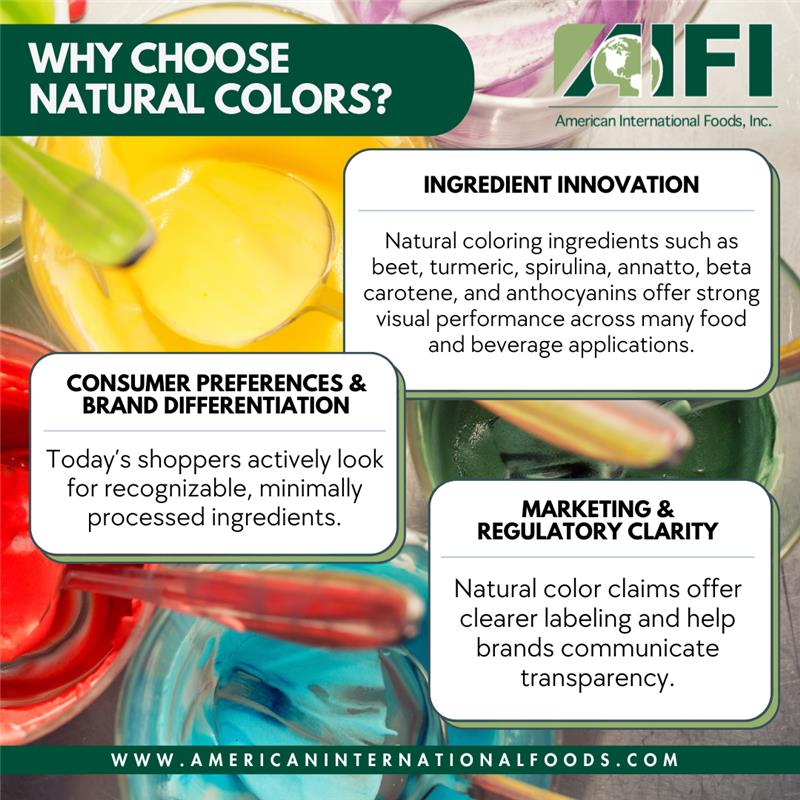 Consumer Preferences and Brand Differentiation
Today’s shoppers actively look for recognizable, minimally processed ingredients. Market research from Innova Market Insights shows the clean-label movement is accelerating, with strong demand for natural ingredient stories and transparency.
Retail research indicates that a large majority of consumers prefer products featuring clean or better-for claims. Natural colors support these expectations by helping brands improve label clarity and product appeal.
Marketing and Regulatory Clarity
Natural color claims offer clearer labeling and help brands communicate transparency. Consumers often see natural color statements as more trustworthy than artificial alternatives. Documented sourcing and proper regulatory support help products meet compliance requirements while aligning with shopper expectations.
Ingredient Innovation
Natural coloring ingredients such as beet, turmeric, spirulina, annatto, beta carotene, and anthocyanins offer strong visual performance across many food and beverage applications. Suppliers and formulators continue to improve stability, processing performance, and color vibrancy in baked, refrigerated, shelf-stable, and beverage systems.
While natural colors offer significant benefits, some challenges remain, including seasonality, light sensitivity, and pH limitations. Reliable supply partners and strong documentation are critical as manufacturers expand their use of naturally derived color systems.
Why Manufacturers Choose AIFI for Natural Colors
American International Foods provides key advantages for companies transitioning from artificial to natural colorings:
- Broad portfolio and technical support: AIFI supplies a wide range of natural colorings, including beet, beta carotene, spirulina, turmeric, annatto, and more.
- Supply continuity and logistics: AIFI’s nationwide warehouse network and inventory management help mitigate seasonality and continuity issues.
- Regulatory and formulation expertise: AIFI supports documentation requests and technical specifications so manufacturers can optimize color performance in finished products.
Natural colors are more than a marketing advantage. Backed by strong consumer preference and measurable market growth, natural coloring systems are an essential tool for manufacturers seeking clean-label differentiation and improved transparency. AIFI helps brands address cost, supply, and formulation challenges while bringing clean-label products to market.
Natural Color Applications
 Baking and Snacks
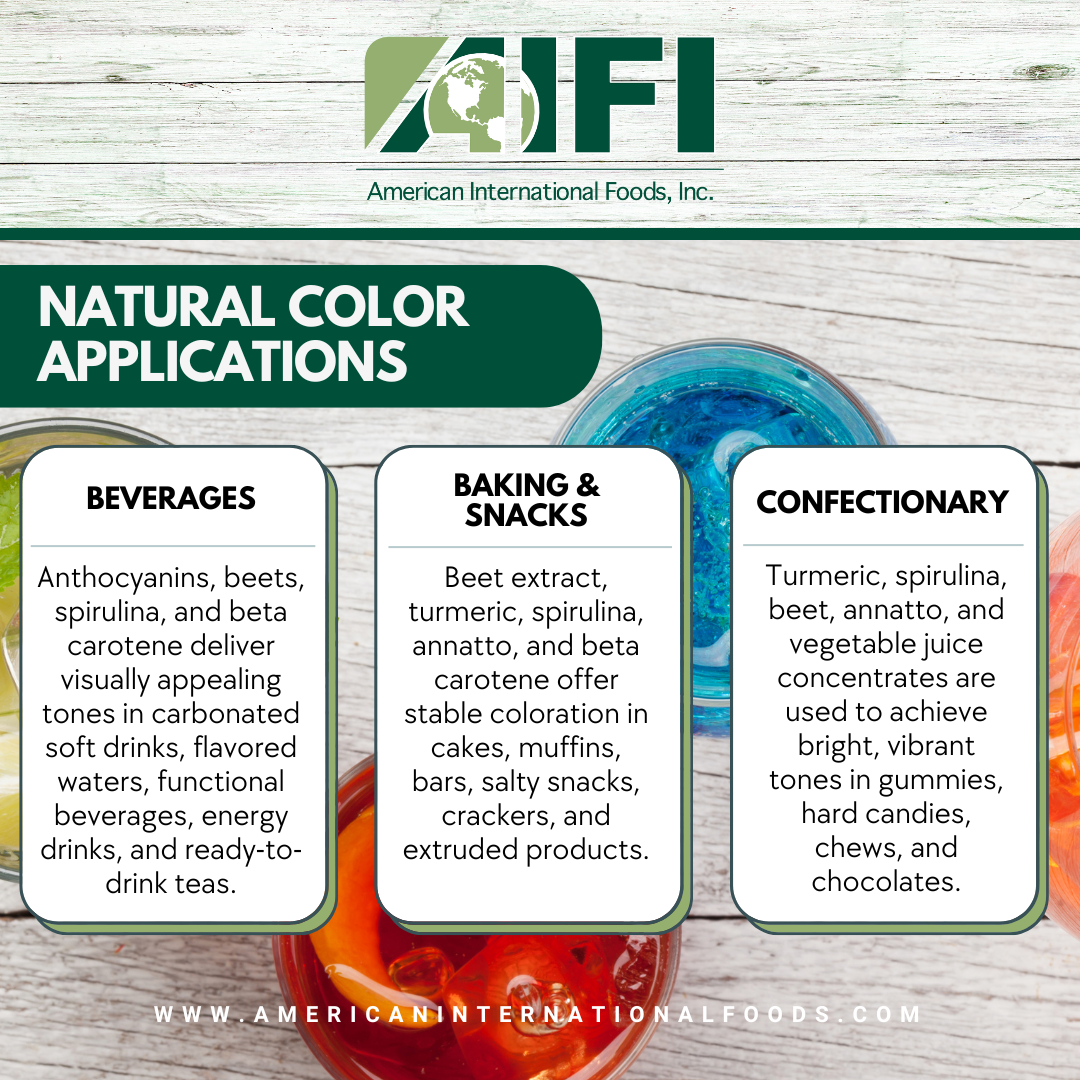
Baking and snack manufacturers rely on natural colors that maintain performance through heat-intensive processes. Beet extract, turmeric, spirulina, annatto, and beta carotene offer stable coloration in cakes, muffins, bars, salty snacks, crackers, and extruded products.
Market data shows that clean-label claims continue to influence purchasing decisions in bakery and snack categories. AIFI supports these needs with a broad portfolio of natural colorings, strong documentation, and reliable nationwide distribution. This ensures consistent performance during scale-up, despite seasonal variability or ingredient shortages.
Beverages
Beverage developers continue to lead the adoption of natural color systems. Anthocyanins, beets, spirulina, and beta carotene deliver visually appealing tones in carbonated soft drinks, flavored waters, functional beverages, energy drinks, and ready-to-drink teas.
Color stability in beverage processing is essential. Natural colors must withstand acid systems, pasteurization, and extended shelf-life requirements. AIFI provides ingredient diversity, documentation, and sourcing support to help manufacturers address these technical considerations, especially as they expand into plant-based and functional formulations.
Confectionery
Confectionery applications require natural colors that can perform in high-sugar and high-heat environments. Turmeric, spirulina, beet, annatto, and vegetable juice concentrates are used to achieve bright, vibrant tones in gummies, hard candies, chews, and chocolates.
Clean-label trends remain strong in candy categories, especially gummies and fruit chews. Natural colors help brands appeal to parents and younger shoppers seeking greater transparency. AIFI’s natural color offerings and distribution capabilities help confectionery manufacturers maintain supply continuity during seasonal demand peaks.
Additional Uses and Applications
Natural colors continue to grow across dairy, plant-based, savory, and frozen categories.
- Dairy and plant-based dairy: Beta carotene and annatto help achieve cheese and dairy coloration. Beet and spirulina support plant-based alternatives.
- Savory products: Turmeric, beet, and vegetable-based colors are used in sauces, prepared meals, seasonings, and snacks.
- Plant-based meats: Spirulina and beet are used for natural meat-like coloration.
AIFI supports these cross-category needs with ingredient sourcing, technical documentation, and a nationwide distribution network that simplifies procurement.
Natural Color Applications: Technical Specifications
Below are representative examples of key specifications for natural colors commonly used in baking and snacks, beverages, confectionery, and other food & beverage applications. Values may vary. * In the following tables, stability range” refers to the range at which the color keeps its intended hue/shade. Outside this range, variations in color may occur.
Red/Pink Natural Colors – FD&C Red No. 3 & Red No. 40 Natural Alternatives
| Ingredient | Typical Format | Heat Stability | pH Stability Range | Usage Amount | Notes |
|---|---|---|---|---|---|
| Beet Juice Concentrate | Powder/Liquid | Medium | pH 4-7 | 0.1-0.5% | Pink–red; less stable in low pH |
| Red Radish | Liquid/Powder | Moderate-High | pH 3-7 | 0.1–0.3% | Bright red; more acid-tolerant than beet |
| Elderberry Extract | Liquid/Powder | Moderate | pH 2.5-6 | 0.1-0.4% | Red-purple in low pH |
| Black Carrot | Liquid/Powder | Moderate-High | pH 3-7 | 0.1-0.3% | Strong red-purple; good stability |
| Red Cabbage | Liquid/Powder | Moderate | pH 4-7 | 0.1-0.4% | Pink at low pH, purple at neutral pH |
| Purple Sweet Potato | Powder | High | pH 3-7 | 0.1-0.5% | Heat-stable purple/magenta |
Yellow Natural Colors – FD&C Yellow No. 5 & Yellow No. 6 Natural Alternatives
| Ingredient | Typical Format | Heat Stability | pH Stability Range | Usage Amount | Notes |
|---|---|---|---|---|---|
| Turmeric Extract | Powder | High | pH 3-7 | 0.05-0.2% | Yellow/gold; sensitive to light |
| Safflower Yellow | Liquid/Powder | High | pH 3-7 | 0.05–0.2% | Very stable bright yellow |
| Annatto | Liquid/Powder | High | pH 3-7 | 0.05-0.2% | Golden yellow; heat-stable |
| Beta Carotene | Powder/Emulsion | High | pH 2.5-7 | 0.005-0.2% | Stable in beverages & dairy |
| Pumpkin Juice Concentrate | Liquid | Moderate | pH 4-7 | 0.1-0.5% | Warm yellow-orange |
| Carrot Juice Concentrate | Liquid | Moderate | pH 4-7 | 0.1-0.5% | Yellow-orange |
Purple/Magenta Natural Colors – Natural Alternatives for the Combination of FD&C Red No. 3 or Red No. 40 & FD&C Blue No. 1 or Blue No. 2
| Ingredient | Typical Format | Heat Stability | pH Stability Range | Usage Amount | Notes |
|---|---|---|---|---|---|
| Elderberry Extract | Liquid/Powder | Moderate | pH 2-6 | 0.1-0.4% | Purple-red in acid |
| Purple Sweet Potato | Powder | High | pH 3-7 | 0.1–0.5% | Very stable magenta/purple |
| Black Carrot | Liquid/Powder | Moderate-High | pH 3-7 | 0.1-0.3% | Deep purple-red |
| Red Cabbage | Liquid/Powder | Moderate | pH 4-7 | 0.1-0.4% | Pink/purple depending on pH |
| Red Cabbage | Liquid/Powder | Moderate | pH 4-7 | 0.1-0.4% | Pink at low pH, purple at neutral pH |
Blue Natural Colors – FD&C Blue No. 1 & Blue No. 2 Natural Alternatives
| Ingredient | Typical Format | Heat Stability | pH Stability Range | Usage Amount | Notes |
|---|---|---|---|---|---|
| Spirulina Extract | Powder/Liquid | Low-Moderate | pH 5-7 | 0.05-0.3% | Unstable in acid; avoid pH less than 5 |
| Gardenia Blue | Powder | Moderate | pH 4-7 | 0.05–0.15% | Blue; more stable than spirulina |
Green Natural Colors – FD&C Green No. 3 Natural Alternatives
| Ingredient | Typical Format | Heat Stability | pH Stability Range | Usage Amount | Notes |
|---|---|---|---|---|---|
| Spirulina + Turmeric/Safflower (Blends) | Blend | Low-Moderate | pH 5-7 | Varies | Natural green created from blue and yellow |
| Matcha/Green Tea Powder | Powder | High | pH 5-7 | 0.1–1% | Earthy green; bakery/snacks |
| Spinach Powder/Concentrate | Liquid/Powder | Moderate | pH 5-7 | 0.1-0.5% | Leafy green tone for pasta, plant-based |
Brown/Warm or Neutral Natural Colors – Natural Alternatives for the Combination of FD&C Red No. 40 & FD&C Green No. 3
| Ingredient | Typical Format | Heat Stability | pH Stability Range | Usage Amount | Notes |
|---|---|---|---|---|---|
| Caramel | Powder/Liquid | High | pH 2.5-8 | 0.02-0.5% | Label-friendly brown/amber |
| Cocoa Powder | Powder | High | pH 5-8 | 1–6% | Warm brown; bakery and snacks |
| Apple Juice Concentrate | Liquid | Moderate | pH 3-5 | 0.1-0.5% | Amber-brown tones |
| Carob Powder | Powder | High | pH 5-7 | 0.1-0.5% | Dark brown; confectionery and bakery |
About AIFI – A Leading Natural Food Coloring Supplier & Distributor
Sourcing Natural Alternatives to Artificial Food Colorings

American International Foods, Inc. has natural food colorings on hand to assist manufacturers & distributors in maintaining continuity of supply. We ensure our food coloring ingredients are sourced responsibly and meet requirements set for quality & safety, each with complete documentation to verify.
We maintain complete documentation for each ingredient we offer, allowing our customers transparency and peace of mind. AIFI provides its customers with unparalleled industry knowledge, personalized supply chain solutions, and a complete product line comprised of more than 2500 food and beverage ingredients.
For further information about natural food coloring sourcing, pricing, general inquiries, or additional information regarding artificial food coloring alternatives, please contact AIFI using the link below.